Showing posts with label Turkey Red. Show all posts

Friday, September 6, 2019

Winter Wheat Planting

I spent 2019 thinking that the fall planting would go in the north end of the field.  This part of the field had nothing since the 2018 spring crop of Marquis, only successive plantings of oats and peas.  I figured the south end would have to wait for dryer conditions.

However, I was able to get into the south end by early July and worked it up several times.  Each time I killed more weeds and I felt the soil looked pretty good.  I also put about ten loads of compost down, and it looked pretty clean after the rain came.  So I decided to put the fall planting in the south end.

I did considerable research and hemming and hawing over the planting date.  Conventional wisdom said I should wait until after September 20.  I posted the question online and all the academics were against planting earlier than the 20th, due to the risk of hessian fly and aphids.

I could not get a good answer to the simple question, "what am I risking by planting earlier?"  I know that last year the stand was not well established, and I suffered a lot of winter kill.  Old publications say wheat should be planted in late August or early September.  The amish I met out in western WI planted in late August, and a couple people online said the same thing. 

I decided to plant on Sept 9.  I know from watching previous years that if it started raining in the second half of month, all options would start to look pretty bad.  In practice, this is what happened.  Rain started around Sep 15, and I don't know of a single local farmer who planted winter wheat in 2019.  The rains just caused the planting window to close in.

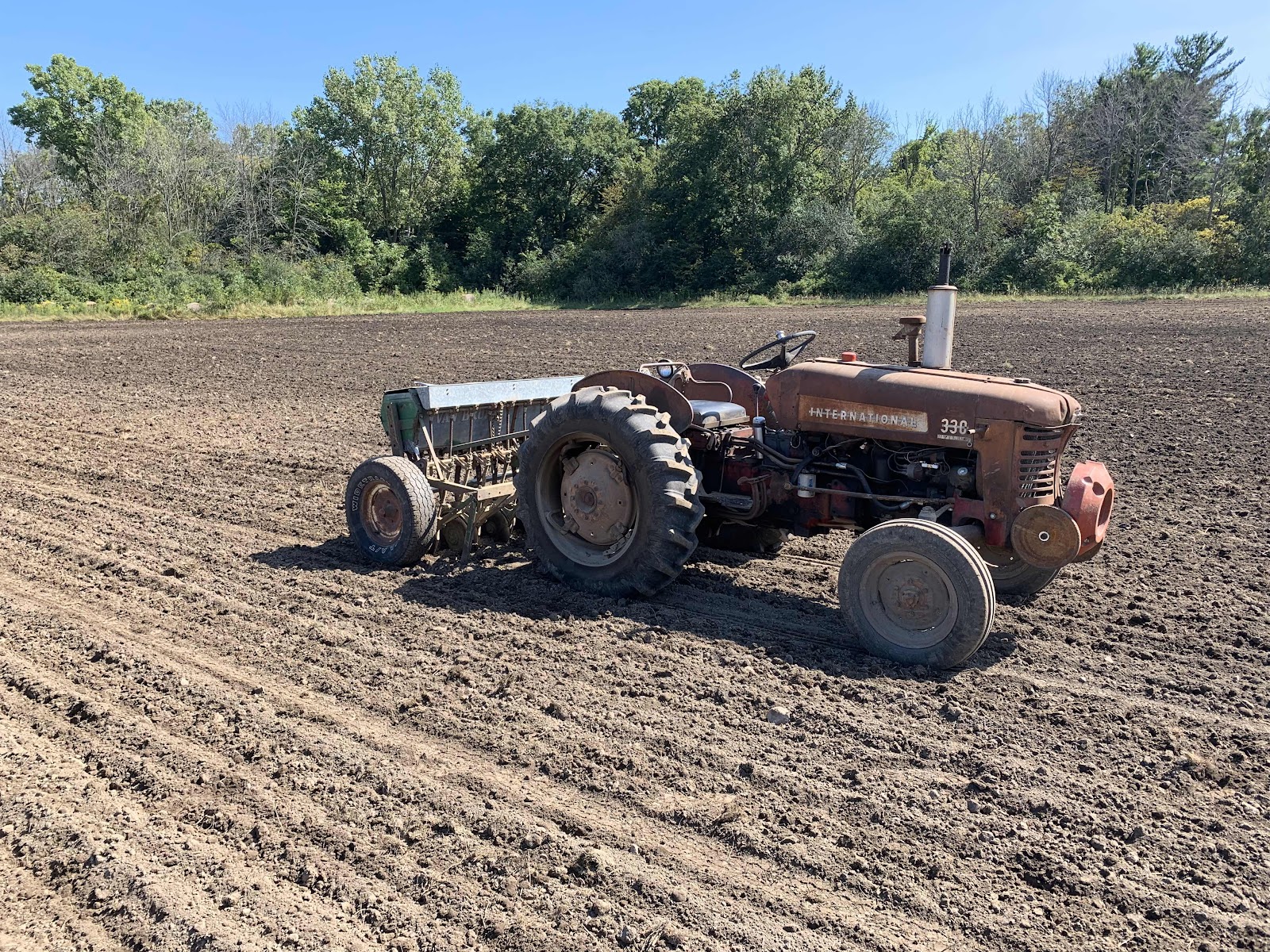
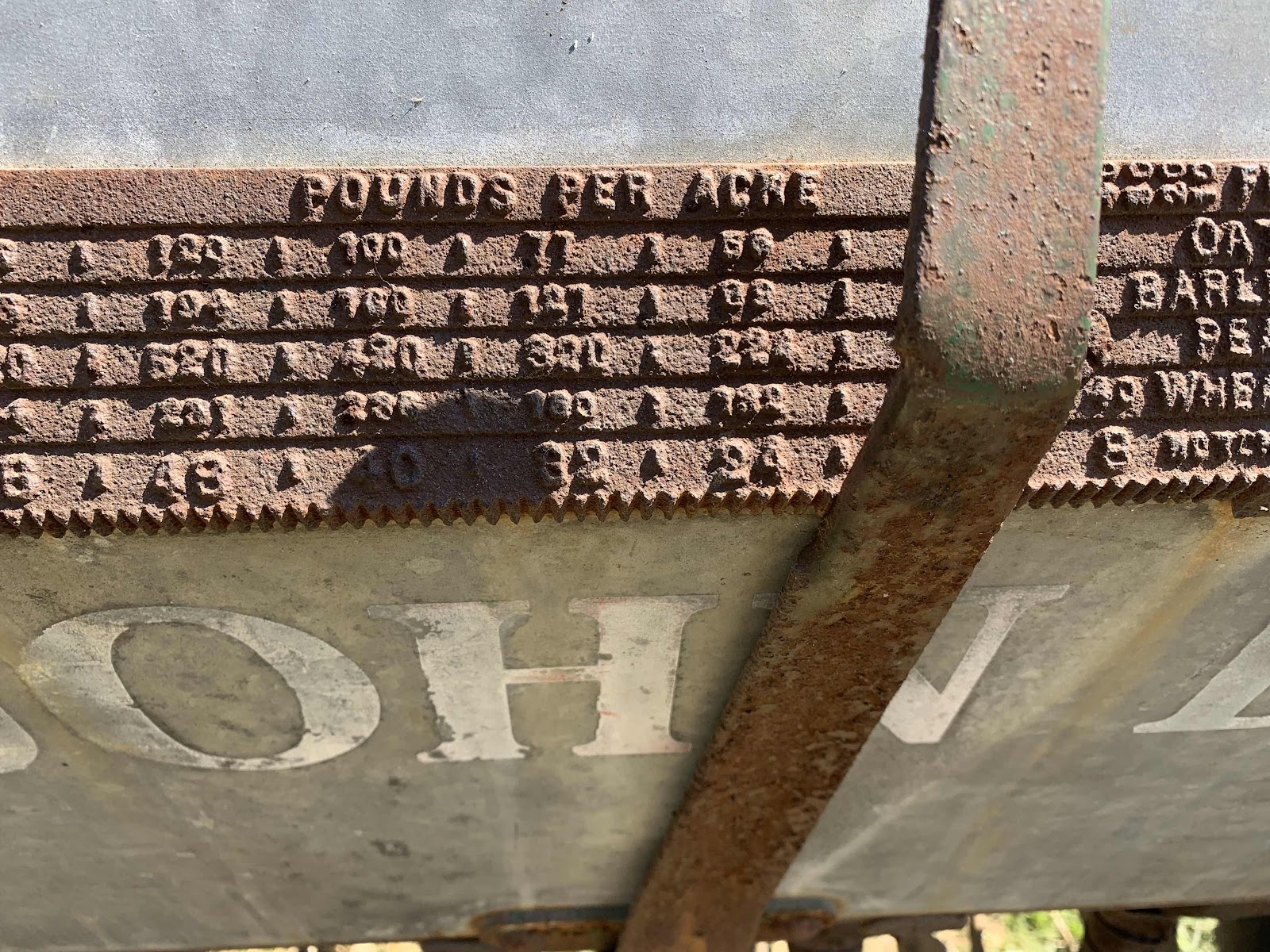
It ended up that I planted 1.7 acres of Wisconsin No 2, at a rate of 130 lbs/acre.  I was using notch 20 on the drill.  I suspect that plumper wheat would have ended up lower than 130.  At any rate, I would have preferred around 110.

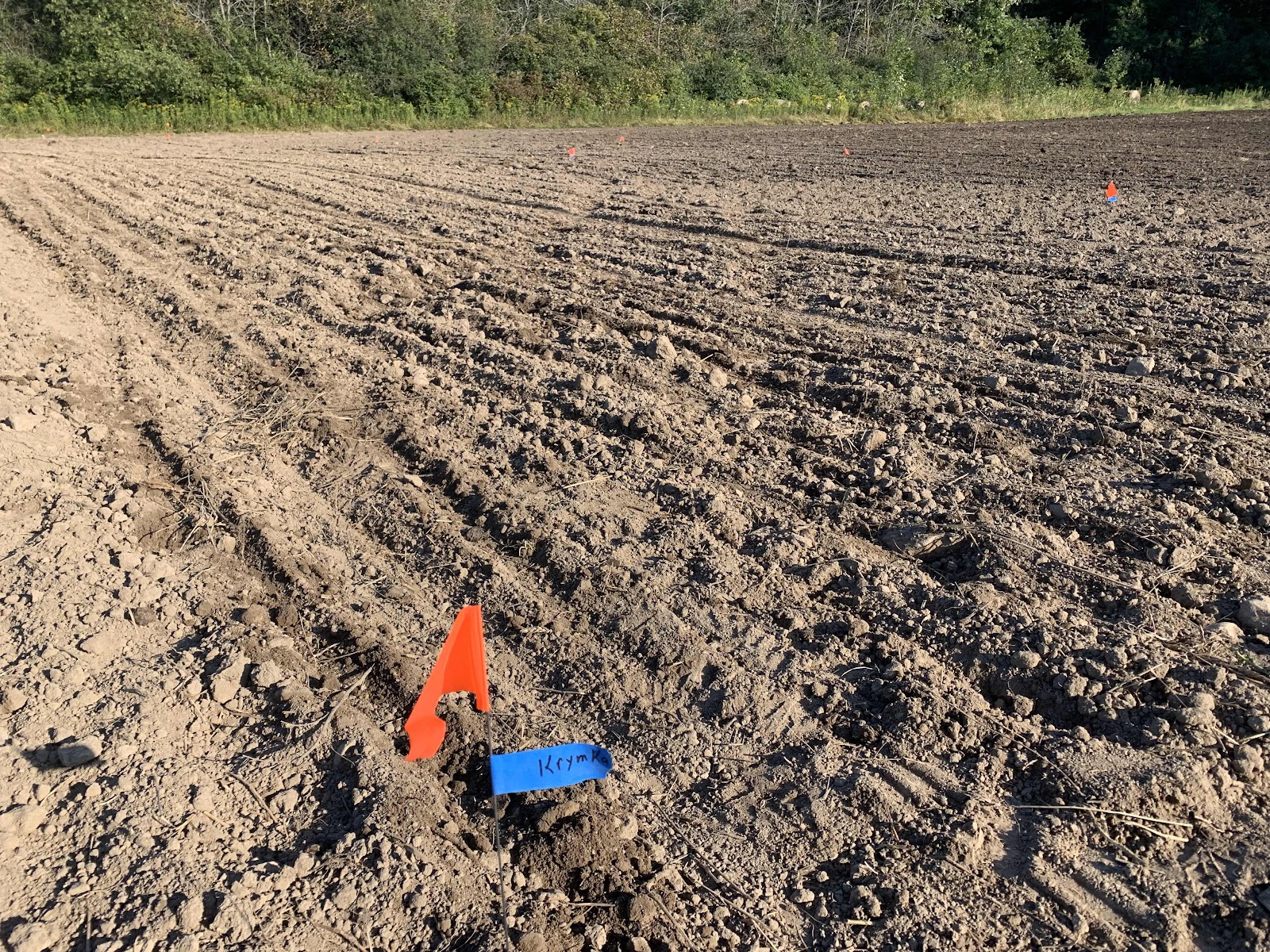
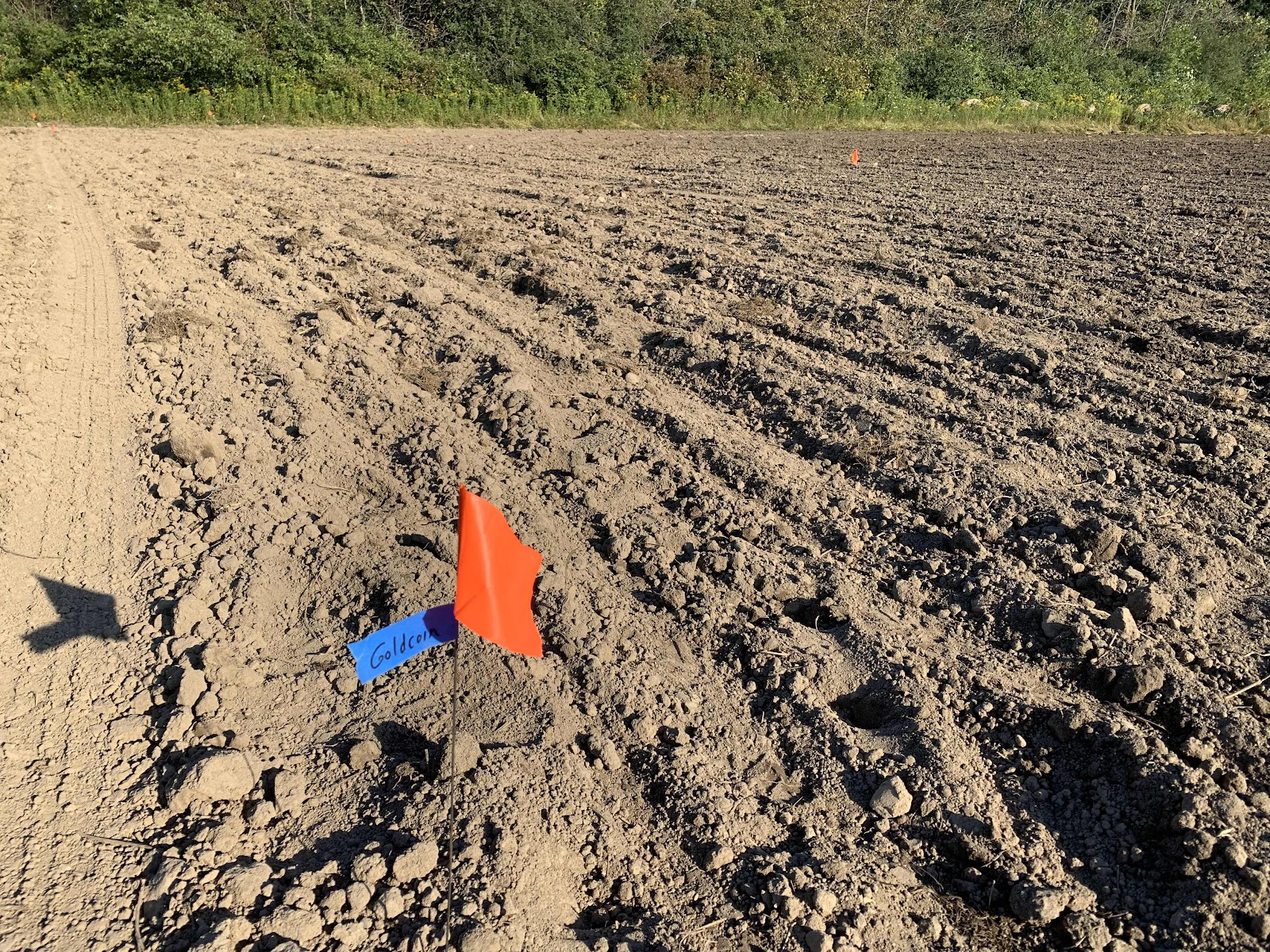
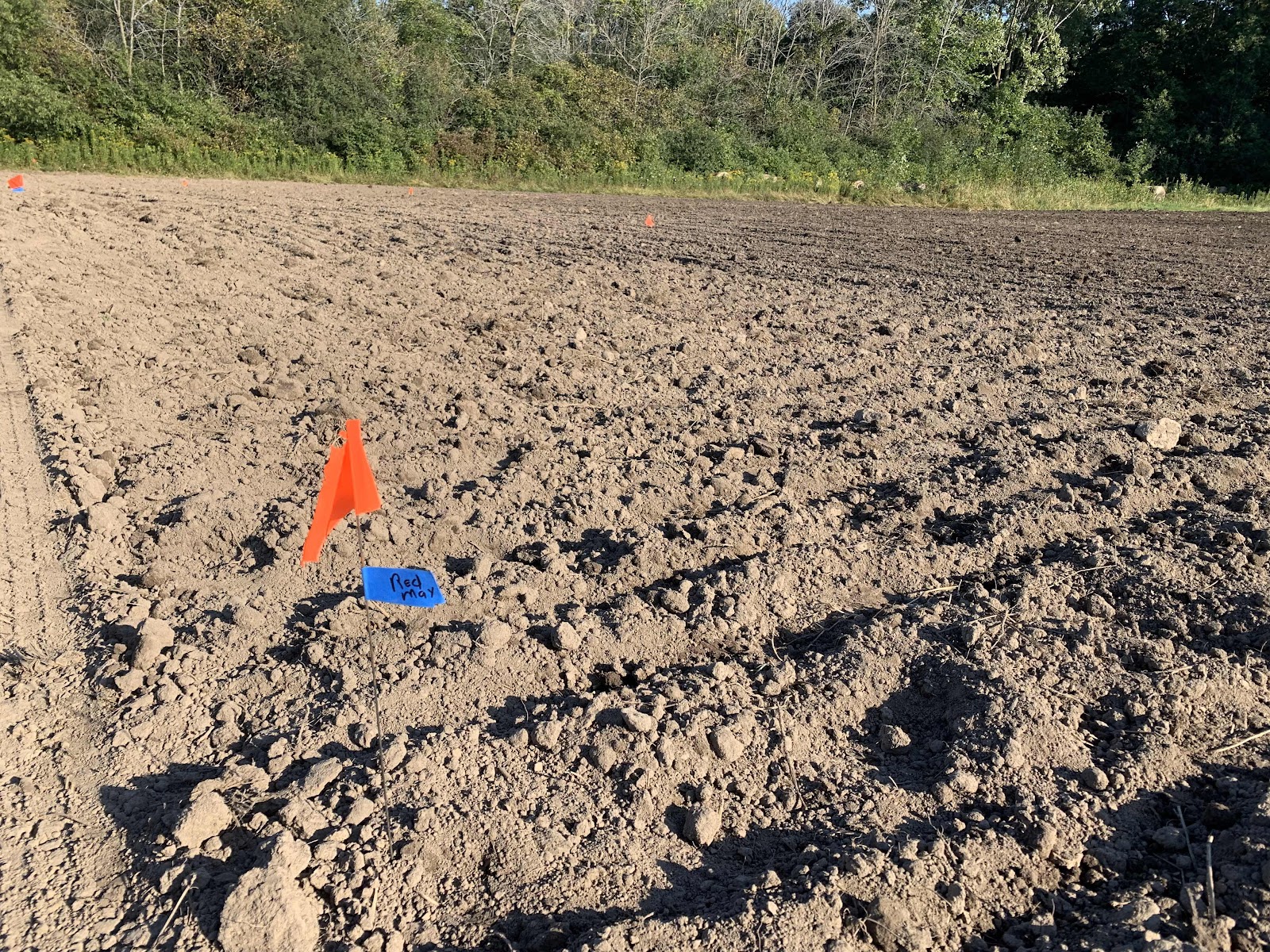
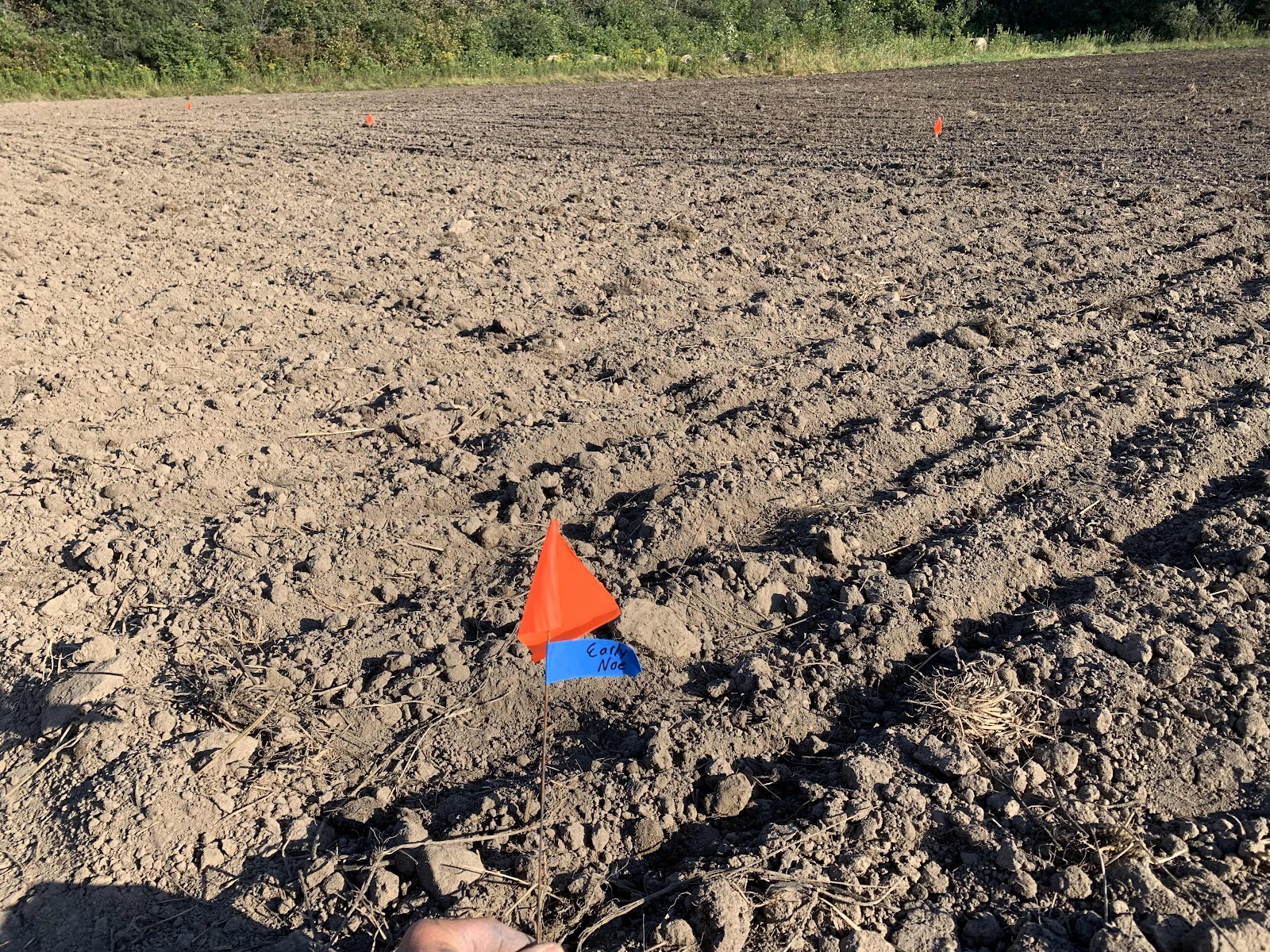
Although at this point I'm getting sick of all the small plots of seed that I'm growing out, I still continued with the Krymka, Goldcoin, Red May, and Early Noe.  They are tucked in to the Northeast corner.
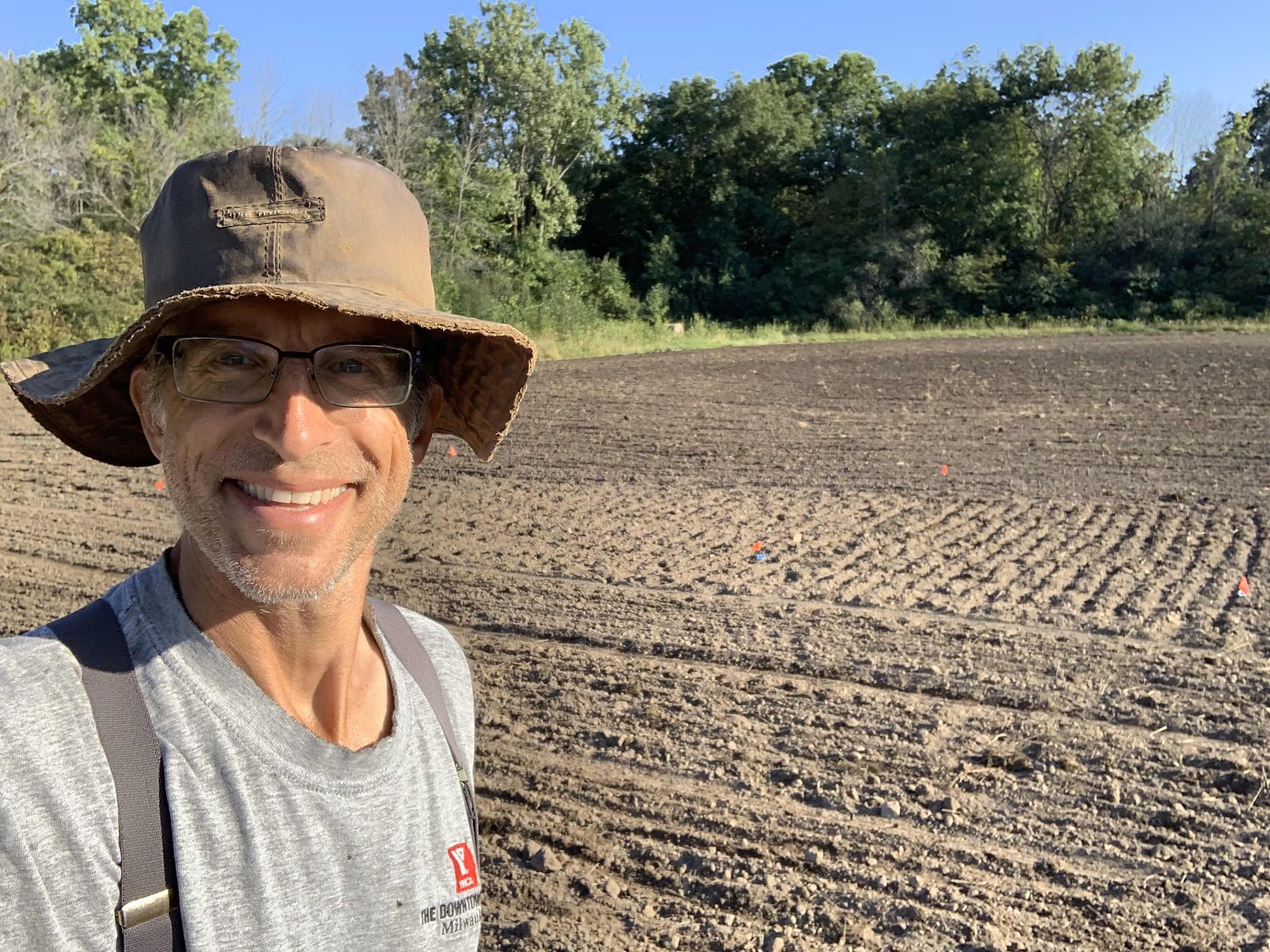
The test plot/grow out area in the NE corner.

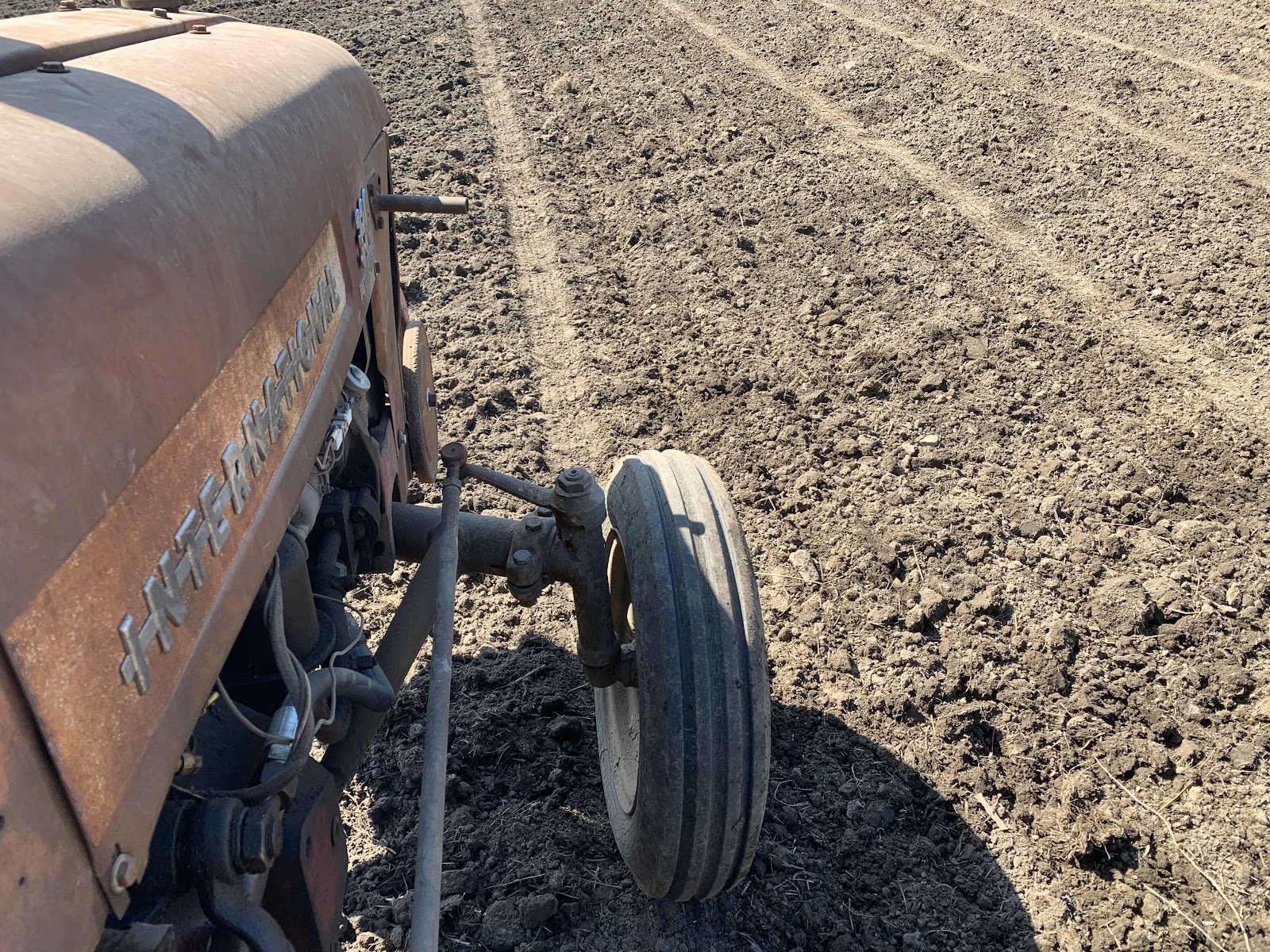
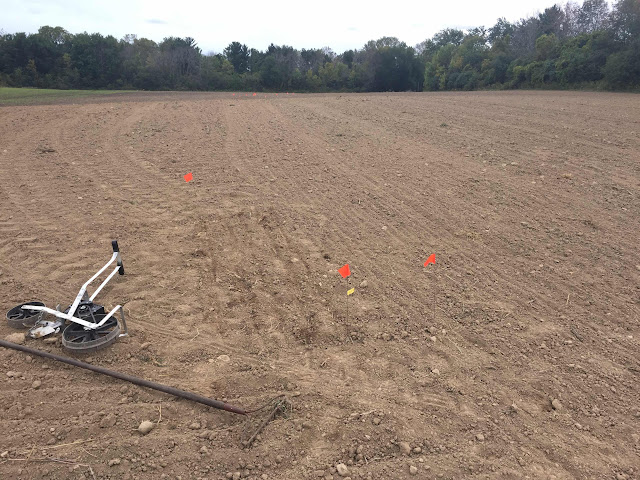
Tire placement, for reference.

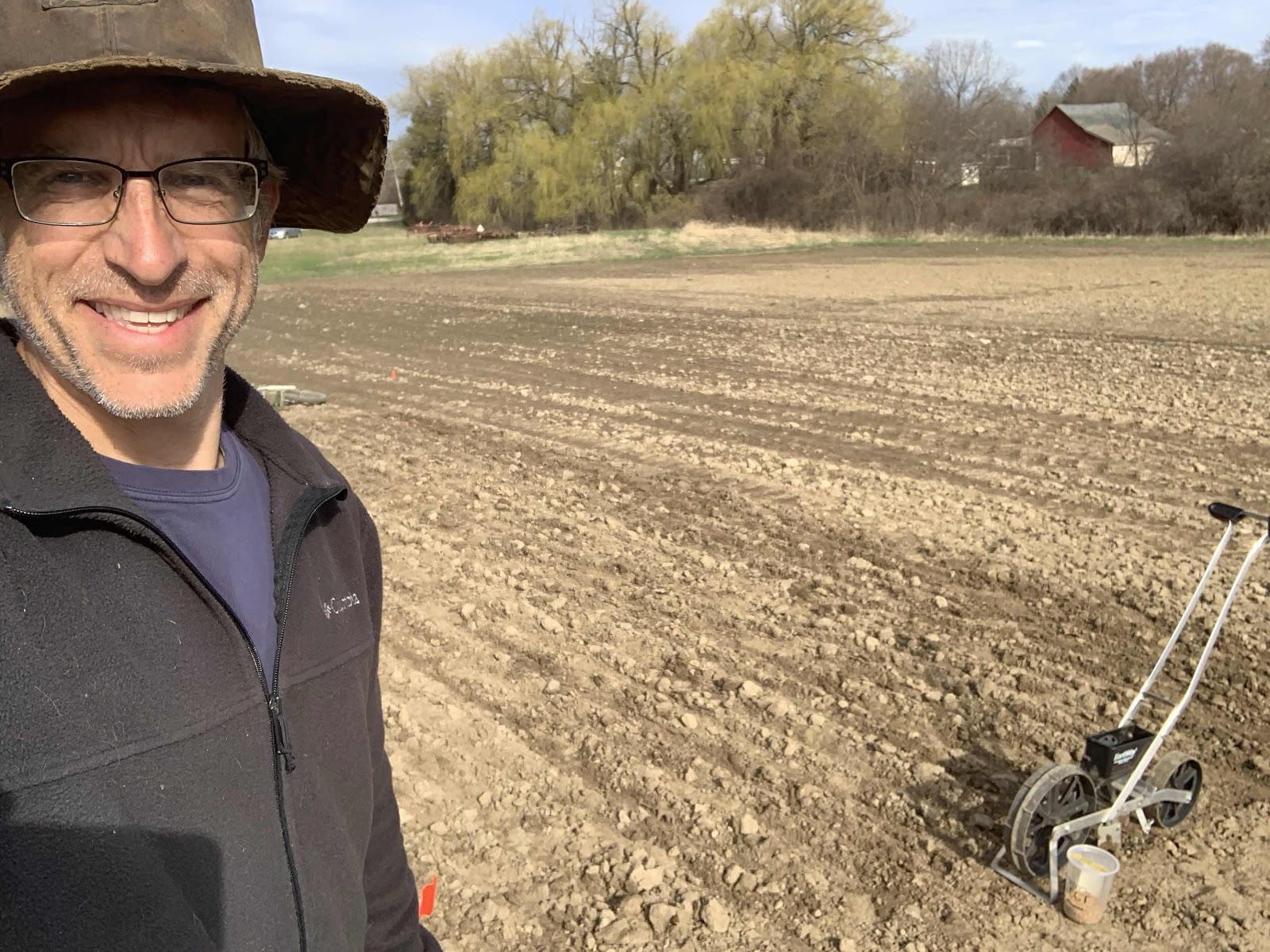
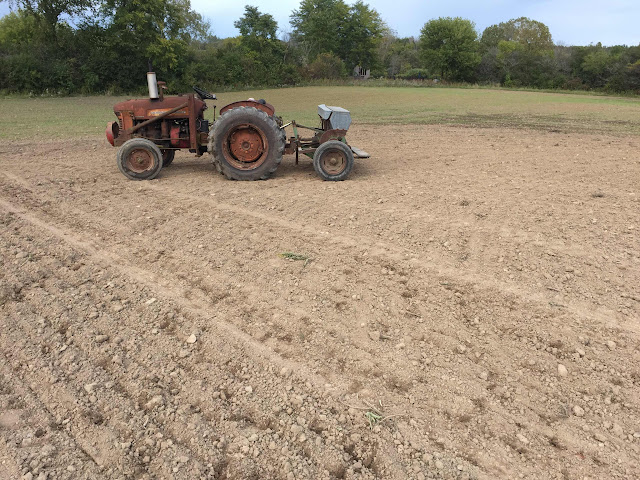
The IH 330 really ran well this season.

Krymka is the largest planting, the most northerly of the plots.

Goldcoin is all the way east, and between the WN2 and Krymka.

Red May is just west of the Goldcoin.

I don't know what I will do with the Early Noe, but I want to maintain the seed stock.

Notch 20

Wednesday, May 8, 2019

May Survey

Here is what the Newman Rd field looked like this week.  The UW-Extension wheat report said that wheat in Southern Wisconsin is two weeks behind where it was last year.  Last year was also a late year, so I guess that's where climate conditions may be headed in my part of the world.  Cold, late, wet springs.  I feel bad that these conditions coincided with the first major planting of Wisconsin No 2 wheat in 80 years.  All that precious seed killed by these awful growing conditions!  But enough survived for the project to continue.

The latest climate summary from NOAA just announced that the last 12 months were the wettest on record in the US.

This is the Haynes Bluestem planting.  There is a slight washout from spring rains but otherwise it looks good.

Here is the Marquis planting.  Coming up on schedule.

The Vavilov (left) and Wisconsin No. 2.  There is no longer any denying it--the winter wheat planting was heavily damaged.  Based on the patterns and extensive washout, I believe that 90% of the damage was caused by the severe heavy rains in September, October, and November of last year.  It could be that some of it was winter-kill, but I really think most of it was rain-kill.  A combination of the saturated conditions, and the attendant cloudy cold conditions (which severely limited growth before winter set it), really doomed this planting.  I will at least be able to get back the precious seed that I planted, and I expect at least a few bushels to sell.  But not nearly what I was hoping for!

A healthy section of the Wisconsin No. 2.

Here is what April looked like in my back yard.  Rain, wet, and cold.  It's now the second week of May and we're still dealing with highs in the low 40's with rain and overcast conditions.

Sunday, April 28, 2019

Java Plot

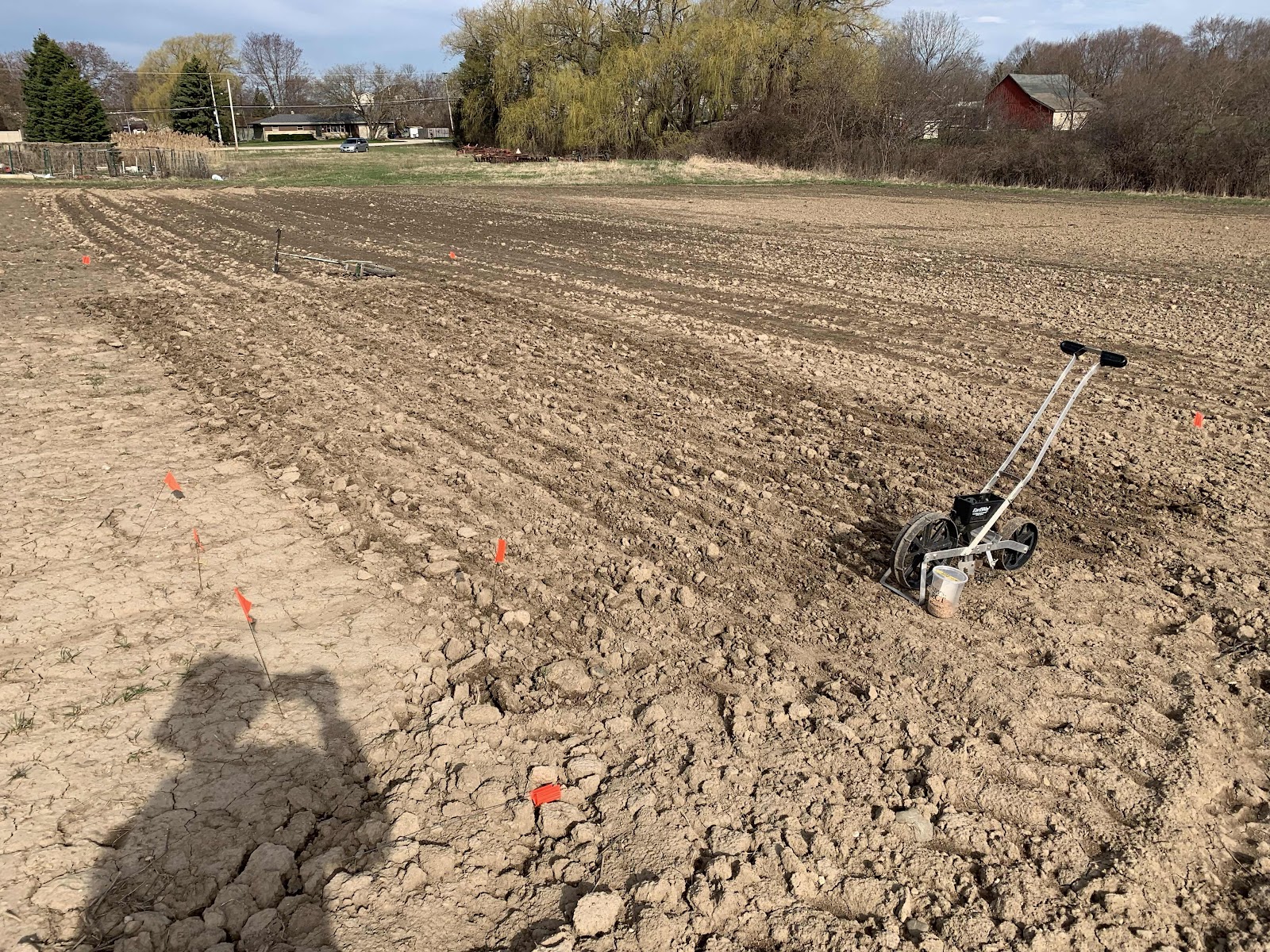
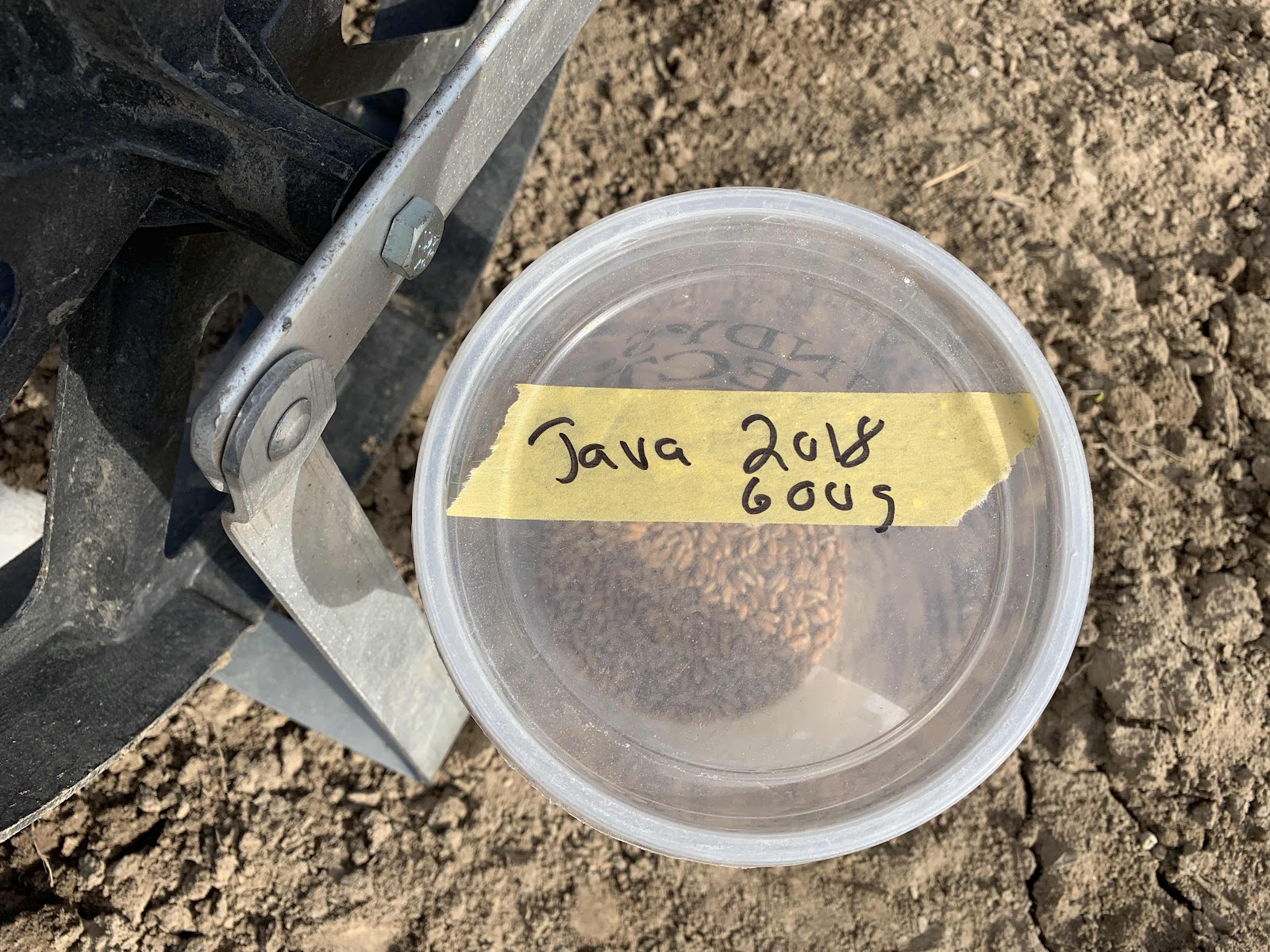
The Java has outgrown the home test plot so I put it in the Newmand Rd field.  I could have planted it when I did the the main planting on April 9, but I was kind of curious what a later planting would look like.  This meant I had to work up a section by hand, since the moisture from a big snowstorm compacted the soil.  With the wheel hoe I worked up a section 27' x 12' on the North end of the WN2 planting, and drilled in with the earthway as usual.  465 grams, good conditions for planting (at least up in this high and mostly dry spot).


Here is the Wisconsin No 2 up close and personal.

The Vavilov and Wisconsin No 2 were both significantly damaged in the rain last September and October.  It feels good to see some green, but probably half of the crop was lost.  More annoying is that I will probably have to do some hand weeding in the field to keep things under control now.  A spotty stand will have trouble keeping weeds at bay.

Here is what the Marquis looks like, up close and personal.  It's coming up very slowly, which is to be expected.  Weather has been cold and damp.


Sunday, October 14, 2018

The big washout

The winter wheat was put to bed on September 27.  Within a few days, we were getting regular, large rain events.  Roughly, there were 2" on 30th, 2" on the 1st, and 2" on the 6th.  I lost track after that.  By October 14th I was able to walk to field and see what had happened.


The worst washout went right through the Red May.  This is actually high ground, and fairly flat.  But it was just a ton of rain.

I think this is the Krymka and Goldcoin.

The high spots look pretty good.
This is the oats and peas with red clover at the North end of the field.
Below are some glam shots from October 9th.  Thankfully, a lot of wheat survived. Wish I had a packer, I think that would have saved more of the planting in the low spots.


This is all Vavilov.  It was too wet to walk out and see the WN2.

Thursday, September 27, 2018

Newman Field Winter Wheat planting

After waiting the entire summer for good planting conditions, a single day in late September finally presented itself.  The high areas of the field on Newman Road were in very good condition and worked up very nicely.  I only needed 2 acres so I could pick and choose.

The Vavilov plot measures 354.5' x 45.5' and is on the West side.  I drilled in 46 lb 2.8 oz, or about .77 bushels.  It worked out to 2 bushels per acre, which is right on target.

Immediately to the East I put in the Wisconsin No. 2.  This measured 354.5' x 88.5' and it used up 107 lbs of seed, or 1.8 bushels.  It worked out to 2.4 bushels/acre.  I don't know why it ended up so much more per acre than the VTR.  There is no good explanation for the discrepancy, since all the settings were the same.  

I put this year's winter test plot out in the Newman field, since it was the only good soil I had available.  It's in a ten-foot wide strip to the East of the WN2.  I decided to continue growing out the Krymka, Goldcoin, and Red May.  At the South end of this strip I put in single strips of all my Turkey Red strains, so I can see them growing together.  From North to South (photo is facing North), they are:
  • Stephens Turkey Red
  • Ehmke Turkey Red
  • Vavilov Turkey Red
  • Wisconsin No 2
  • Nebraska No 6
  • Montana No 36
To protect the test plot I filled up the hopper with ordinary Ehmke Turkey Red and planted a protective strip around everything.


In the background is the Marquis field from this Spring, which has been planted to oats and peas plus red clover. This was all planted way too late to be much benefit, but there was no possibility of planting it sooner due to the rain.  Basically, I spent the entire summer waiting for the field to be dry enough to work up and plant.  Many fields in our area were not planted this year due to the excessive rain.


I went over the field carefully with the spike tooth harrow to work in the seed and increase soil contact.  I kept it pretty light so as not to contaminate the plantings.

The next day I realized that I really want to see that Early Noe again.  So at the Northeast corner of the entire plot I drilled in about a tiny test planting.  This photo is facing South.

Sunday, July 29, 2018

Nebraska No. 6

I threshed out the Nebraska No. 6 wheat from the test plot today.  This is another selection of Turkey Red, created in Nebraska during the early 20th Century.  I did not see anything too interesting and will not be growing it out.


Nice berries.  I got a yield of 206 grams.


Montana No 36

I threshed out the Montana #36 today.  This is a strain of Turkey Red developed for Montana, presumably by the University there.  I grew it out to compare to my other strains of Turkey.  It was not too interesting and I will not be growing it out.  However, I did put a small row in the Newman Rd test plot next to every Turkey that I have.


Nice looking berries, some good plump ones with nice color.  Not as nice as WN2, but nice. Yield was 325 grams, which is good for seed from the archive.


Sunday, July 22, 2018

Java Wheat Harvest

The entire test plot harvest has gone quickly without much drama.  Everything is being harvested in the old style, meaning I need to wait a couple weeks before threshing.  This means I have labeled sheaves of wheat stuffed everywhere this week!  I hope to get it threshed soon and have my storage space back.

The Java was productive and healthy.  Unlike the Haynes, it lodged a bit.  The stalk is not as strong as Haynes.  In fact, it feels weak and thin.  The heads are healthy and the berries look and taste great.  I will definitely continue to grow it out.


These are the sheaves from the Winter wheat germination test.  Although it's a pain, I plan on threshing them down and doing a side-by-side comparison of the berries.  It will be very educational.  

Wednesday, July 4, 2018

Amazing Observations in the Test Plot

Haynes Bluestem heads.

Culms of Haynes Bluestem in the test plot.  The stand of Haynes is perfect right now.  It was never knocked down, and there is zero wildlife damage.  I will be covering it with bird netting shortly.

Purplestraw is in the foreground here.

This is the Early Red Fife.

Dakota spring wheat.  This is a selection of Haynes Bluestem was released in 1898.  Although it looks very similar to the Haynes Bluestem, it's maturing later than the stand of Haynes.

The Wisconsin Pedigree No. 2 is showing it's red-colored stems just beautifully.  The stand in the test plot is 60% knocked down, but doing well.  There is some wildlife damage but I think it will be OK.  It's very well bird netted now.

The Goldcoin winter wheat has the thickest, reddest stalk I have ever seen.