Showing posts with label Red Fife. Show all posts

Monday, July 29, 2019

2019 Wheat Harvest

The 2019 harvest on the Newman field was an overall bust.  The excessive rain combined with the poor soil nutrition meant that I basically maintained seed stock, and not much more.

Wisconsin No 2 came off on July 29.  It was around 14.8% moisture, excellent considering all the weeds I had to run through the combine.  By the time it was cleaned I had exactly 250 lbs of trustworthy seed.  There were a couple odd bags of "not quite pure" seed for flour, but otherwise it was just those five bags from a planting of 0.7 acre!  Aaargh...

I took the Vavilov off on the 30th.  It was much weedier and did not have any beautiful clear stretches like the WN2 had.  Although it was very wet, I put it out on a tarp in the sun and it came down beautifully.  After a few hours it was down to 12.1% mc.

Straw was baled on August 1, 42 bales worth.

The Marquis took forever to dry down enough for harvesting.  I probably tested with the combine at least three times.  It finally came off on August 5th or so, yielding about eight bags.

On August 3, I cleaned out the home test plot, including wheats Progress, Champlaign, Purplestraw, and Early Red Fife.  I also harvested the Wisconsin No 5 oats (Swedish Select), which looked amazing.
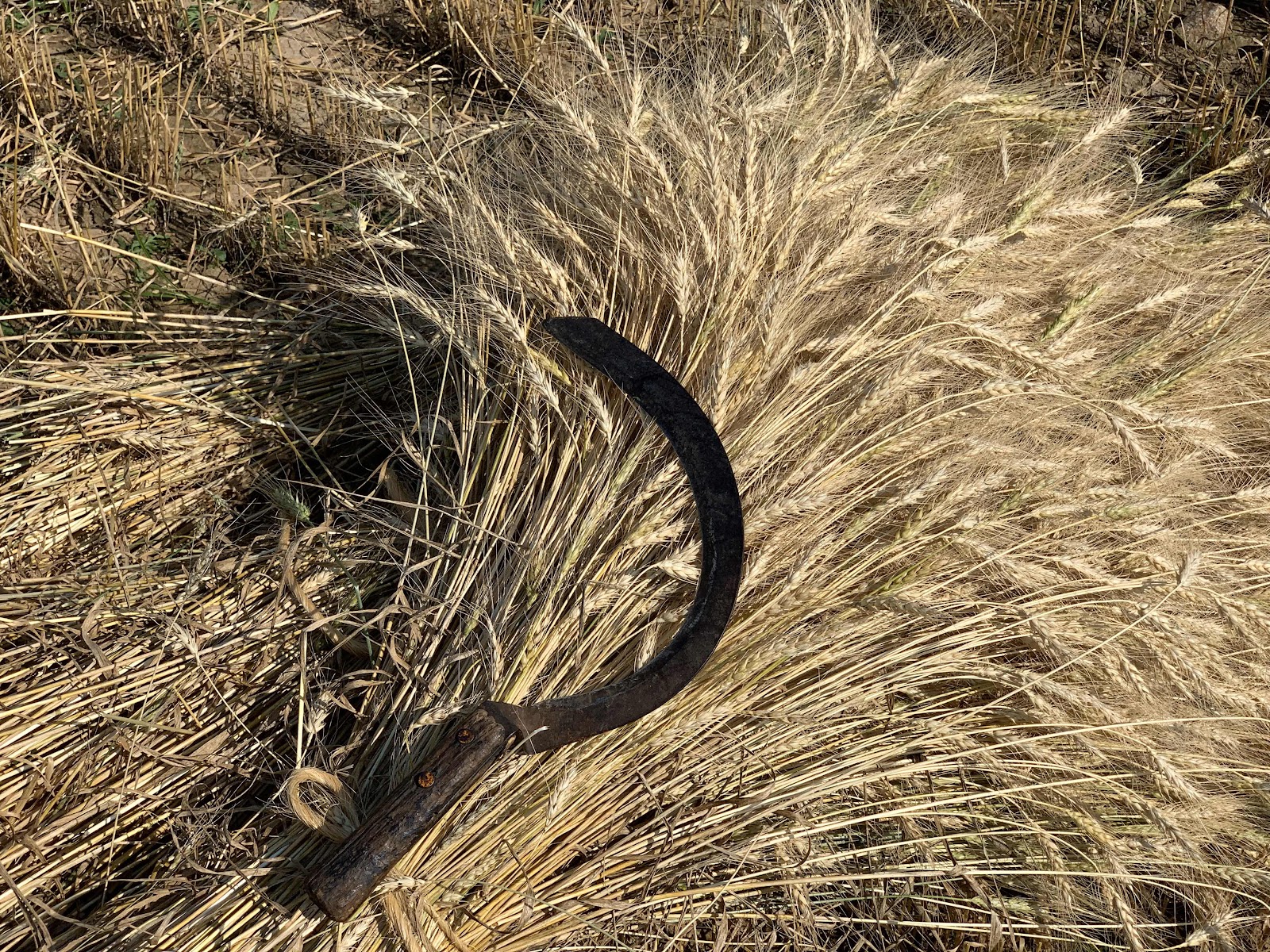
All the java wheat was harvested by sickle.  Although this was just a grow-out year for seed, I'm actually quite excited about it.  The java grew better than anything else this year.  The projected yield was something like twenty bushels per acre, which for this field and in comparison to other 2019 crops was incredible.

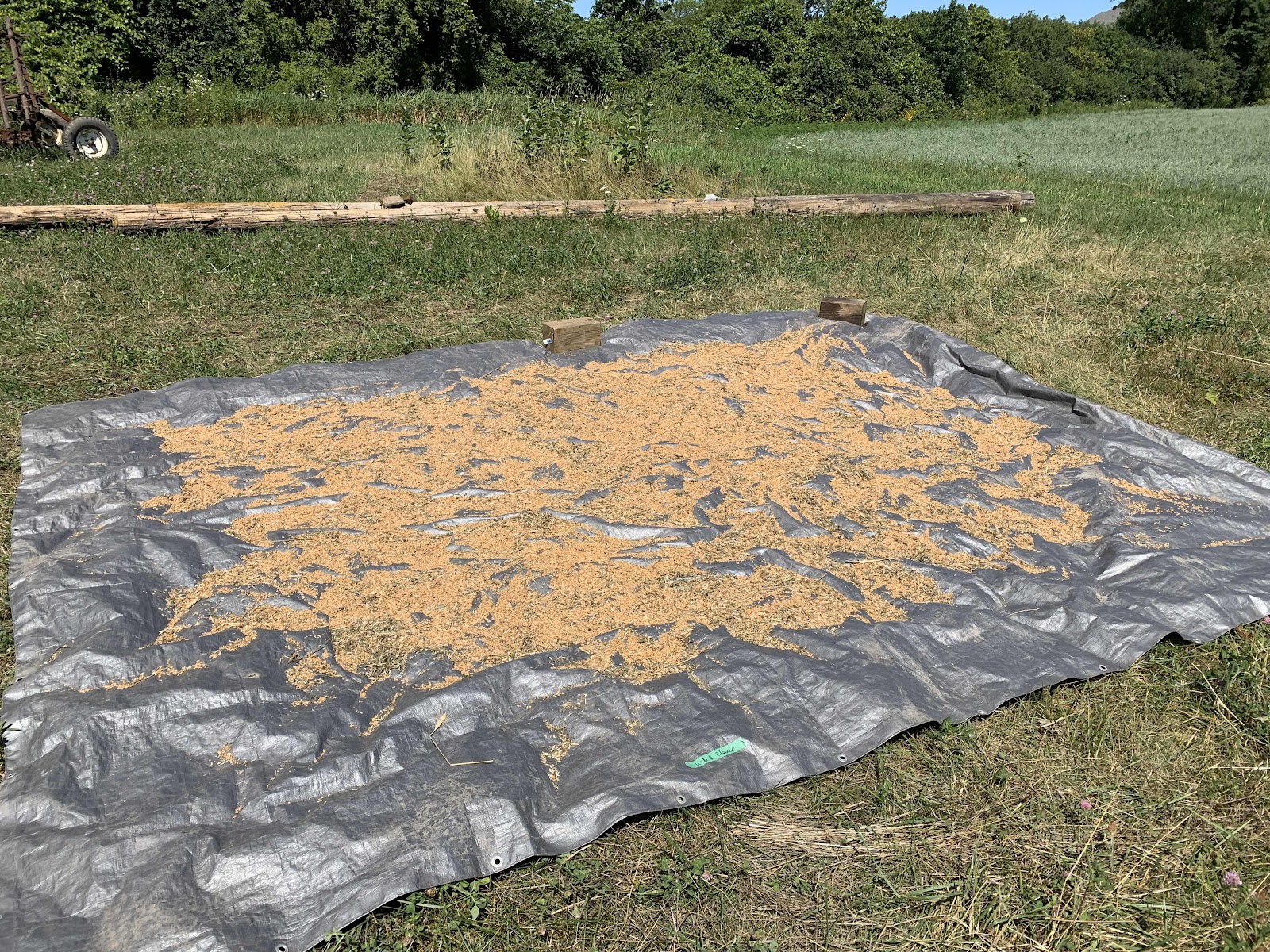
Drying out some seed stock in the sun.  Although this is a pain, if the weather is good it will do a great job of drying out wheat.
Swedish Select, AKA Wisconsin No 5 oats.  Big, beautiful stalks!

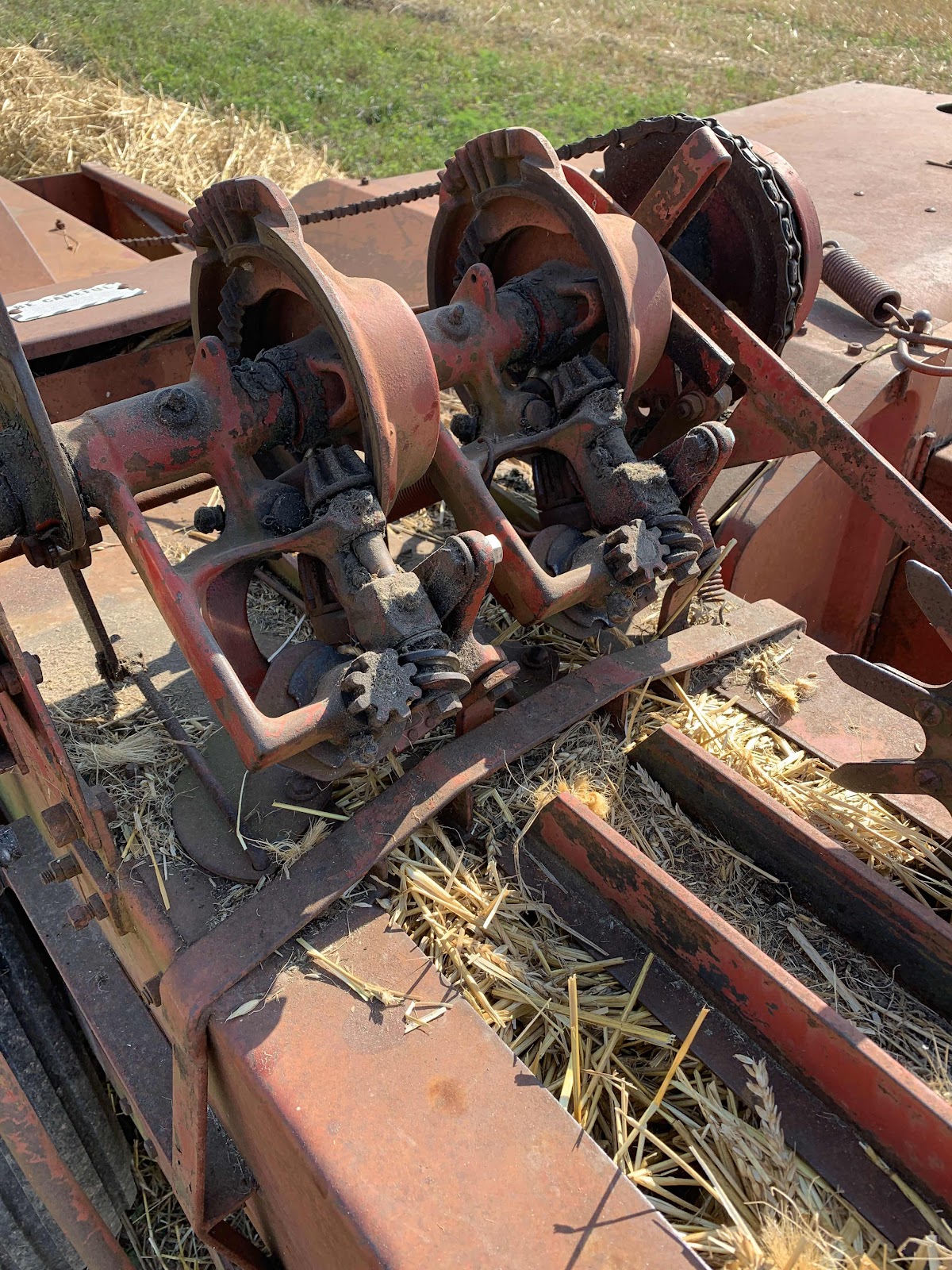
The New Holland baler was a real joy to work on.  It did not do a perfect job, but I found good information online and made decent progress on it.  I am hopeful it will run very well next year.  I baled both straw and hay from the Newman Rd field.

Saturday, April 6, 2019

Homestead test plot spring planting

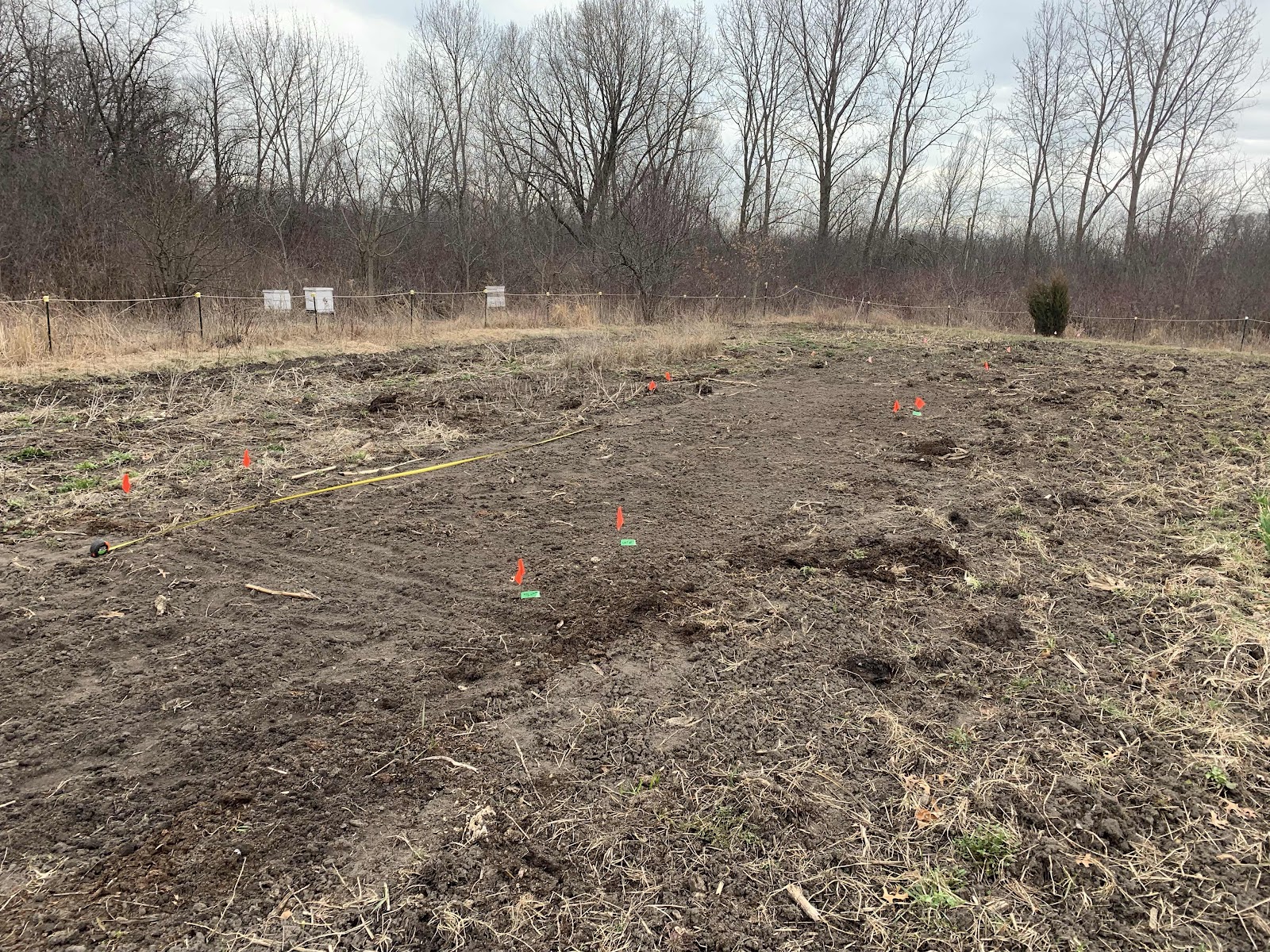
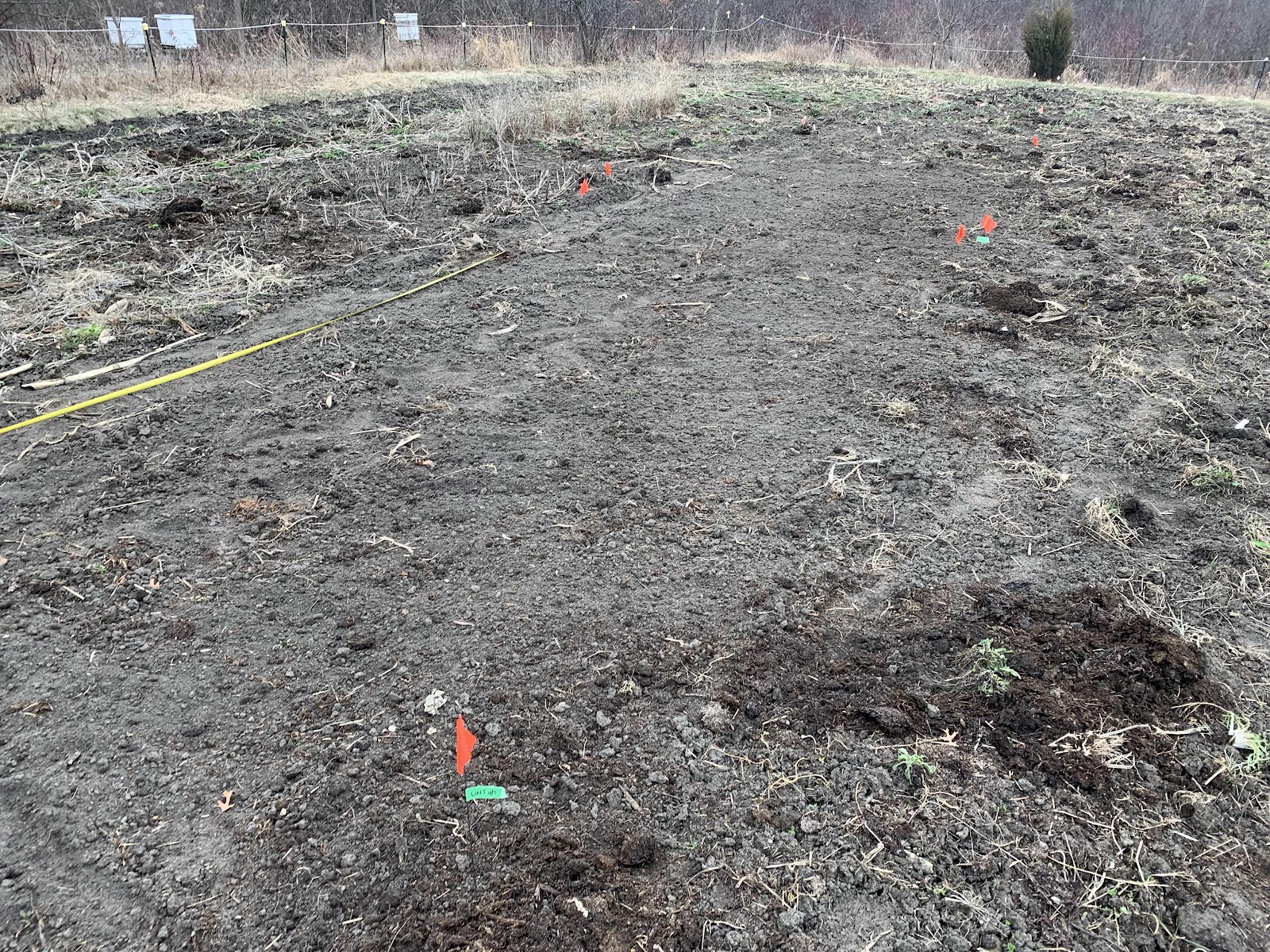
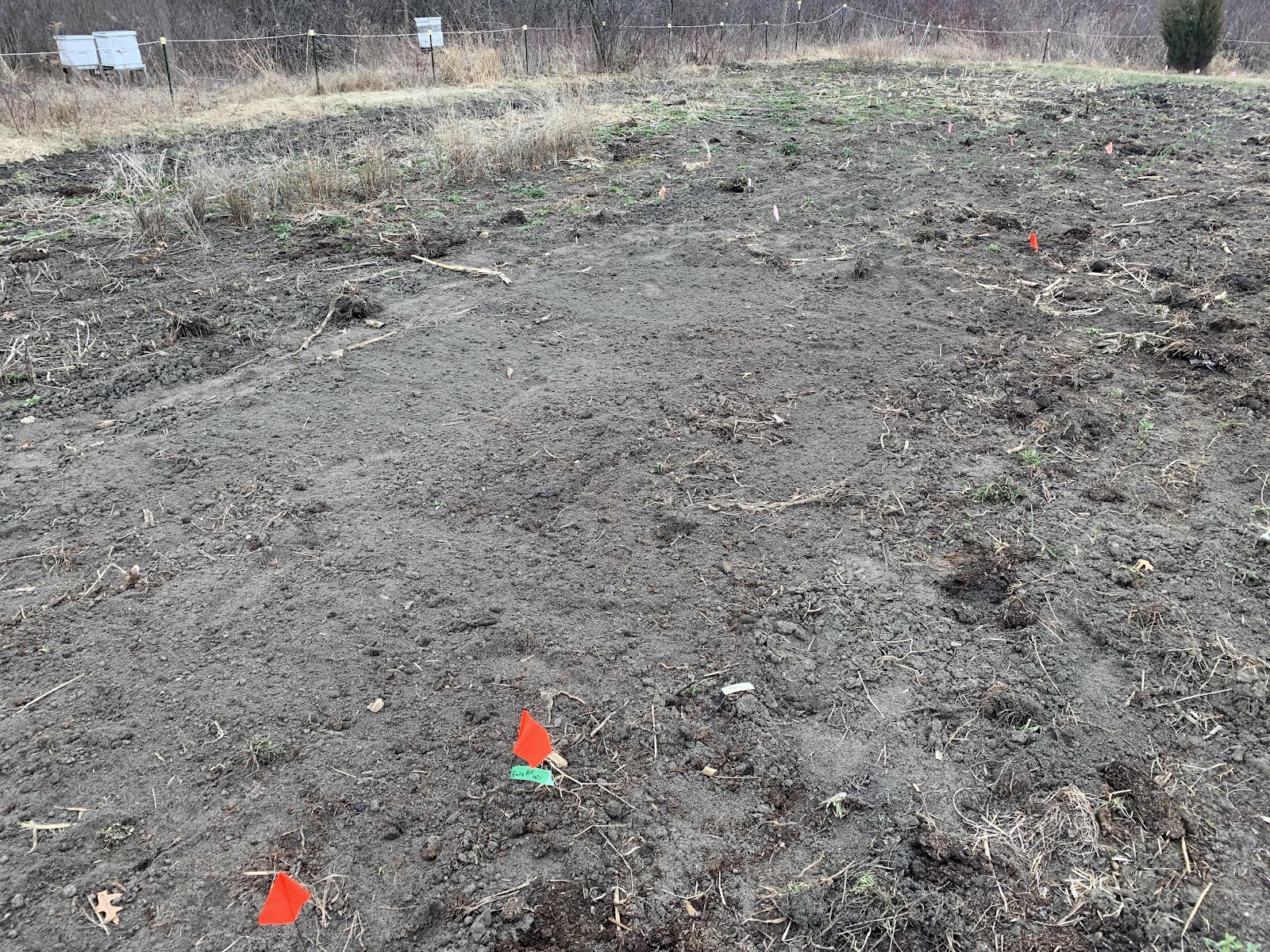
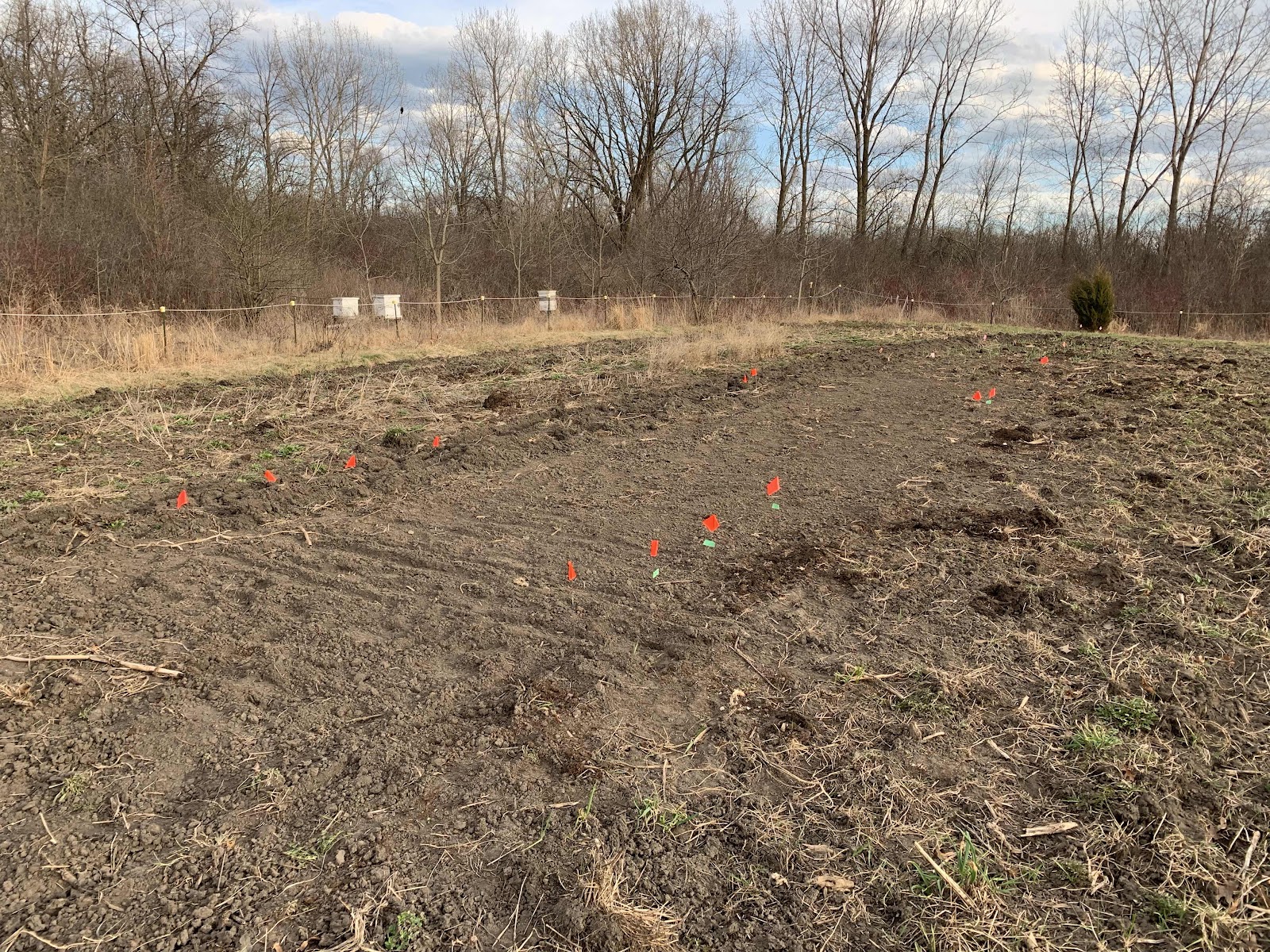
I got some wheat planted in the home test plot.  Soil conditions were not great, but some of the high ground that had been moldboarded last fall was useable.  I just cleaned it up with the wheel hoe and then planted with the earthway seeder.

The strip is 7'4" wide, optimal for covering with bird netting.  I am using 5/8" mesh which mesures 14' x 45'.  So far, this is the best and most durable bird netting I have found (https://www.amazon.com/gp/product/B0016APS14/).  Using my pvc hoops, this net covers 7'4" x 36'.
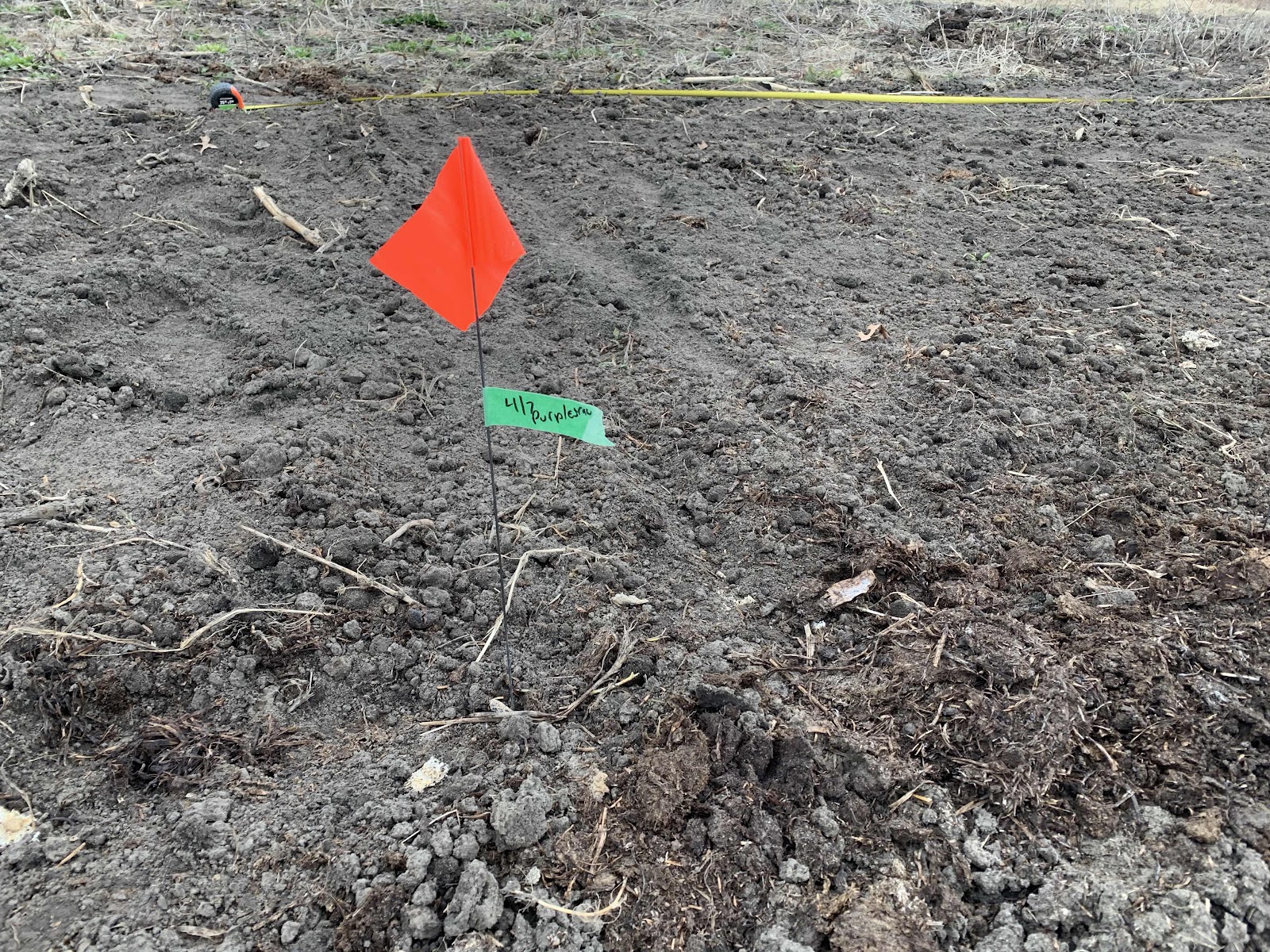
I harvested very little purplestraw last year, and gave most of it to Jerry Hicks.  I kept back 5gm and put it to the South of the Wisconsin No 5 Oats.


I did not weight the oats, but it was 14' of plot.  The beet plate on the earthway did not work well with oats, so I switched to the bean plate.  I should have rubbed out the oats a bit more to de-beard them a bit and make them feed better.


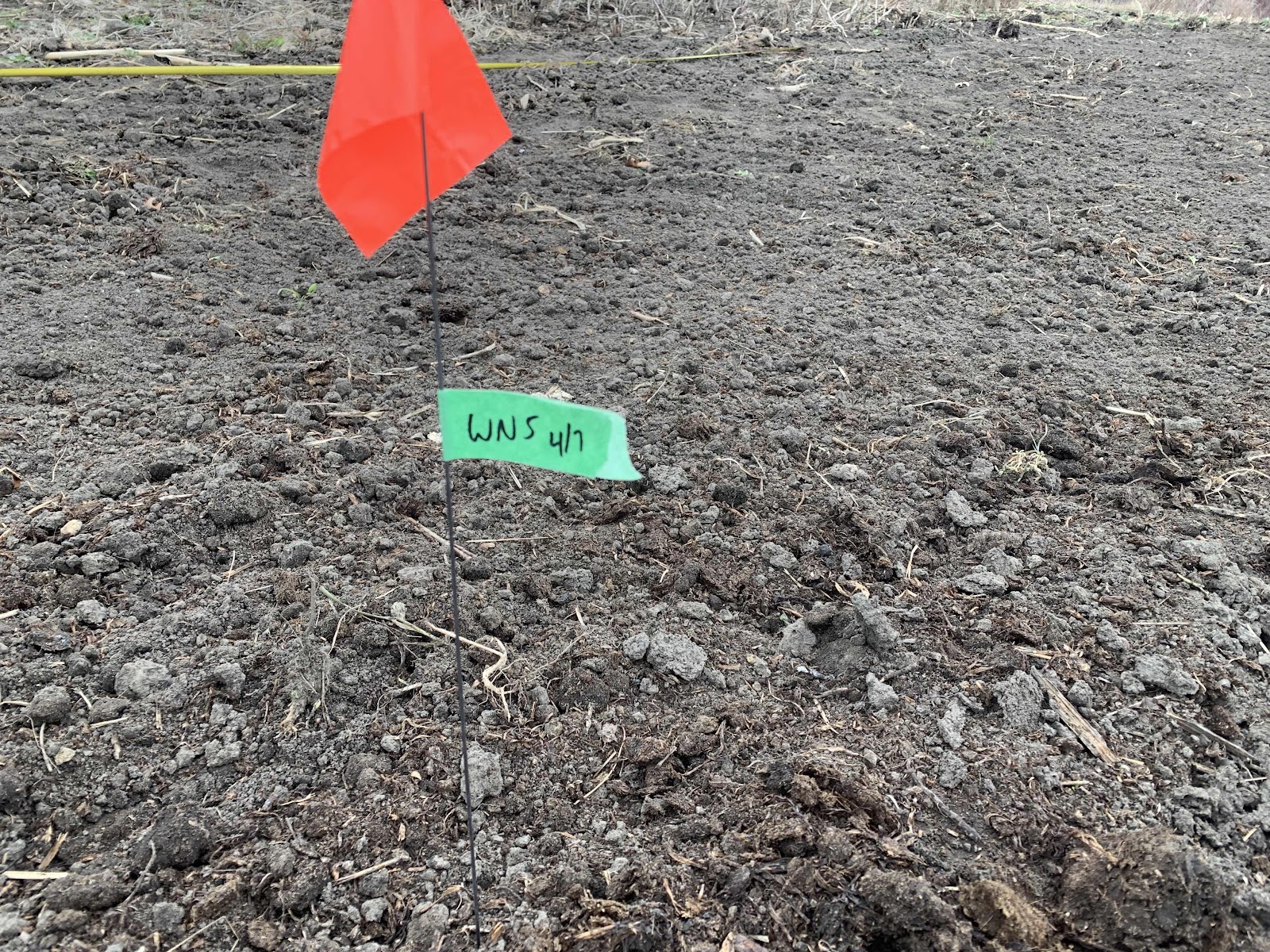
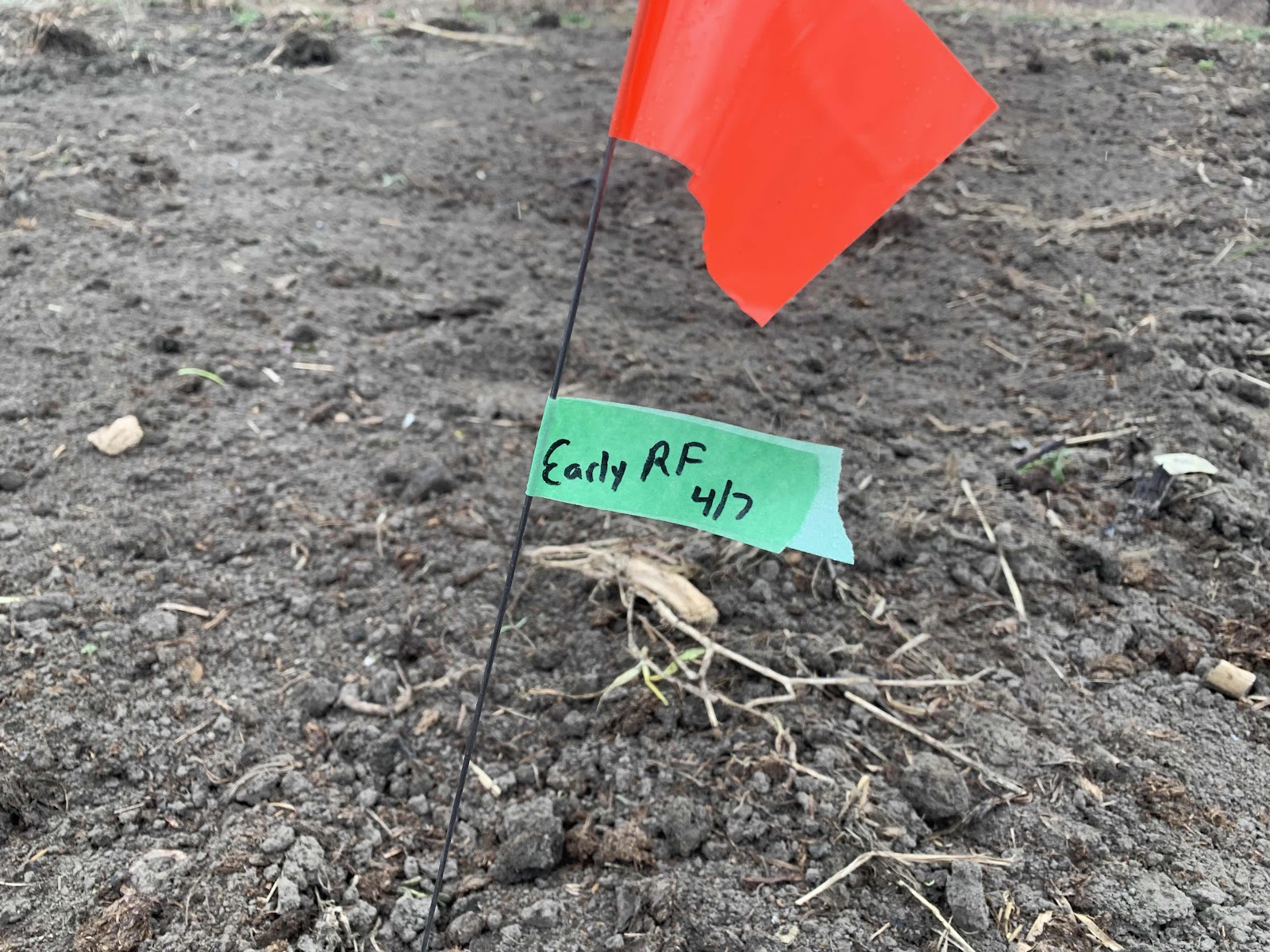
Early Red Fife is on the "high ground," closest to the garlic.  95 grams into 13'.


From South to North, there is Early Red Fife, Wisconsin No 5 oats, Purplestraw wheat, Champlain wheat, and Progress wheat.  I put in the Champlain and Progress two days later.  Both are ordinary 5gm samples from the USDA.

Wednesday, May 2, 2018

Big fields up

The two spring wheat fields have been slow to germinate, but now they are showing good growth.  They were planted on a Tuesday and Wednesday, April 10 & 11.

The Windhaven field.
A railroad maintenance truck decided to get stuck in the field.  I don't think it will bother much.  They were working on the tracks behind the field and decided to get off using Kathy's drive.

The Newman Field.

There are still at least 6 acres on Newman that need to be disced.  Here I planted the tractor pretty good.  I came back a couple days later and managed to get it out.  Although the field is not really a low field, it sure is holding it's moisture.  I hate that all that poorly-buried sod is getting a chance to grow.  Hopefully I will get it under control soon and I can get a summer cover crop planted.

Sunday, April 22, 2018

Spring Wheat Notes

I have been checking the test plot at least twice a day recently.  I'm interested in the appearance of the wheat plants after germination.  Here are my notes from today.  It's been over a week since the first Java wheat emerged.

Winter wheat test plot:

  • Beloturka 100% dead
  • Kharkof  100% dead
  • Red May from 2017 100% dead
  • Nebraska No 60 100% dead
Everything except the Red May is something of a puzzle.  The Red May is no unexpected because it grew so poorly as a Spring wheat, and I have doubts about the seed's authenticity.  But the other wheats are bona fide winter crops, and it's strange that they died.

Spring wheat test plot:

  • Haynes Bluestem is basically all up, and it looks great.  There has been some nice red coloring on some of the stems.
  • Dakota is all up, and it's all green.  This is supposedly a selection of bluestem
  • Early Red Fife is up, with some red tips.
  • Purplestraw is a little behind the other plantings.  It's just starting to emerge.
  • The Red Fife planted as a control next to the Java is all up now.
Today was a beautiful day, sunshine and clear.  The soil is still quite wet but the standing water on the farm has basically disappeared.

Monday, March 26, 2018

Spring Test Plot

I planted five varieties of spring wheat in the test plot today.  The ground was very good, at least in the high spots towards the center of the garden.  This is the earliest I have ever planted wheat and I'm curious to see how it goes.  The historic information I have about growing spring wheat in Wisconsin said that early plantings can be very good.

I put the Java towards the South end of the established winter wheat test plot, in 9 rows.  The plot size was 62" x 120", for approx 53 grams of seed.


I put one row of Red Fife at the very south end of the plot, as a control.  This seed came off my 2017 Hy 38 field.

The Haynes Bluestem was not going to fit at the South end, since it gets wetter there.  So I improvised a patch to the West of the garlic, which was clean vegetable ground from last year.  115 grams total of Haynes Bluestem went in.


I had three new samples from the USDA to plant, which I put in tiny squares just South of the Haynes planting.

Dakota is a selection of Haynes Bluestem, which I am planting as a control.


Early Red Fife is a selection of Red Fife that Saunders made in 1905.  I am hoping to grow this out and make it my primary Red Fife offering in the future.  My hypothesis is that it will be more pure and correct than the Red Fife I have now.


Purplestraw is the forunner of all kinds of bluestems, as well as other major North American wheat.  I'm excited to see how it grows.


Wednesday, August 9, 2017

Hy 38 Red Fife Harvest

The Red Fife harvest on Hy 38 was much more of a saga than the Marquis.  It looked to be slightly later than the Marquis, but conditions were good and I just assumed I could get it out of there after another day or two of drying down.  I was completely wrong!

I did test combining on 7/31, 8/1, 8/2, and 8/5.  Each time the moisture was still too high.  By 8/8 it was looking a little better and I took off about 1 acre.  Each test was a pain--I would generate 1-2 bushels, which would have to be taken home and put into my barrel drier.  The grain never really came off bone dry.  I spent a lot of time with blowers and dragging the hopper out into the sunshine to get the harvest dry.  My hard work paid off, however, and the wheat managed to show a falling number of 380 when tested.  After all the trouble, and a rain event on 8/3, I figured that was pretty good.

It was very interesting to see the differences between Marquis and Red Fife.  Marquis ripened sooner, just like the description says it should.  It also ripened uniformly, meaning that all berries were ready to go at once.  The Red Fife, I noticed, could have some berries ripe and dry, while other berries were still in the hard dough stage.  I take this as a sign of a more primitive, less developed plant.

The Red Fife also out yielded that Marquis, and the stand just looked better.  The tests showed the protein to be a little better.  12.5% for the Red Fife versus 12.0% for the Marquis (db).  So it was a little weird to see the older wheat out performing the new one.

I ended up with 119 clean bushels, which is a yield around 24 bu/acre.  I credit the Red Fife as being slightly better than this, since I failed to plant part of the field due to wet conditions, and I ran out of seed towards the end.  So in effect I should only divide by around 4.5 acres rather than 5.


12.4% was a welcome sight.  A lot of this harvest was higher and I spent many days drying it down.

Below pics are all from my friend Ruth.  My phone camera was mostly not working again.

The "new" Case 1494 tractor worked very well for me this season.  Although I had a couple work stoppages while solving an on-again, off-again fuel problem, the tractor always worked during critical times.  I finally installed a new lift pump and I believe that was the root of the problem.  I combined in 3rd gear a few times but did the vast majority in 2nd gear.  The tractor seems to be very easy on fuel, as well.  For combining I don't think the burn exceeded 1.5 gallons/hr.  


Wednesday, June 14, 2017

Heads Up

The spring wheat in the test plot looks great!

The Java is just starting to head out.

The Haynes Bluestem is further along.  Most of this was planted April 19, a little less than two months ago.

Closeup of the Haynes Bluestem.

The Marquis, planted on April 23, is not showing any seed heads yet.

The Marquis (left) and Red Fife on Hy 38 are nowhere near as far along as the stuff in my garden.  This was planted April 24 and 25, about the same time.

The Windhaven field is starting to sprout thistles.


I cut the Red Clover on Spring Street June 9.  The sickle bar worked well but had trouble where the stems were real thick.  Although drying conditions were nearly perfect, the hay still came off a bit wet.  Ron & I baled on the 12th and 13th.


Tuesday, April 25, 2017

Red Fife and Marquis planting

April 23-25 presented a small window for planting.  The hy. 38 field would not be ready on its own, but with some extra help I might just get the wheat planted before rain resumes on the 26th.

This bean field only needed some digging and dragging to prepare a seed bed.  To hurry the drying along, I dug it very rough on the first pass and let it sit in the sun.  This broke open the crust and let the moisture evaporate.  


On April 24 I drilled in 2 acres of Marquis.  After counting and calculating it came out to 187 pounds/acre.  I was aiming for 150, so this was a little rich.

On April 25 I put in 5 acres of Red Fife.  The drill was still dumping more than I wanted and I had to really skimp to cover the last 1/2 acre.  It came out to 160 pounds per acre.  I did the first 3.5 acres at notch 27, and then went down to notch 20 to cover the ground as the seed ran out.  Every last grain of Red Fife went into the ground!

I used the 330 for drilling and a final drag of the field.  The drag I used was very stiff and it was hard to make it work well.  The 330, with it's new thermostat and temperature gauge, ran amazingly!


Wednesday, April 19, 2017

Spring Wheat Test Plot

I put the 2017 Spring planting to bed in the test plot today.  What a relief!  The long wet wait this year has been agonizing.  Although I am still a week or two away from the commercial plantings, there was a dry enough patch in the garden to get this important planting in today.

There are two new varieties, both extremely old.  Red May and Java are just about the oldest varieties of wheat that were grown historically in Wisconsin.  Red May is actually a winter wheat, but I planted it in the Spring to get a jump on growing it out.  I will harvest it in August, then turn around and plant it again in September.  This will save me a year on growing it out.

There are some other winter varieties that I received recently from the USDA, but I'm fast tracking the Red May because I'm anxious to have enough to taste.  The other varieties I'm more interested in for comparison and morphological observation.


Here is the Haynes Bluestem that I first grew out in 2016.  I am really excited to see how it does this year.  Last year's planting was late in the season.

Here is the Prelude, also in it's second year on the farm.

Here is how the plot looks.  From North to South, each variety is in a 4-row block.  The northernmost block (not pictured, because I planted in later) is a mix of the 2016 varieties that I found after winnowing the chaff.  I hope to grab a few blue stems out of this stand and therefore add to my stock of bluestem seed this year.  Haynes Bluestem really does have blue stems, and it should be easy to spot.  The other seed should be Turkey, Pedigree No. 2, Bacska, and Prelude.

Here is one of the stands of Turkey from last Fall's planting.  It looks beautiful!  To the left you can see a few blades of Bacska that survived the Fall die-off.  If I get some seed out of here I will propagate it with Spring plantings from now on.  I believe that the Bacska died due the topsy-turvy weather last Fall.  This variety seems to require a very gradual cooling and a reliable snow cover to survive winter.  Since it was once a successful winter crop in Wisconsin, I suspect this crop failure is a sign of a changing climate in our region.  

Testing the digger in the field on Hy 38.  It's too wet to work the whole field but I found a dry spot to try out this digger and drag, which are both new to me.  This is a soybean field I am leasing and all of the Red Fife and Marquis will be planted here.  If the rain holds off and the sun keeps coming out, I hope to plant 7-8 acres next week.